How GST 2.0 Will Affect Your Pricing and Revenue in 2026
Raj
13 December 2025
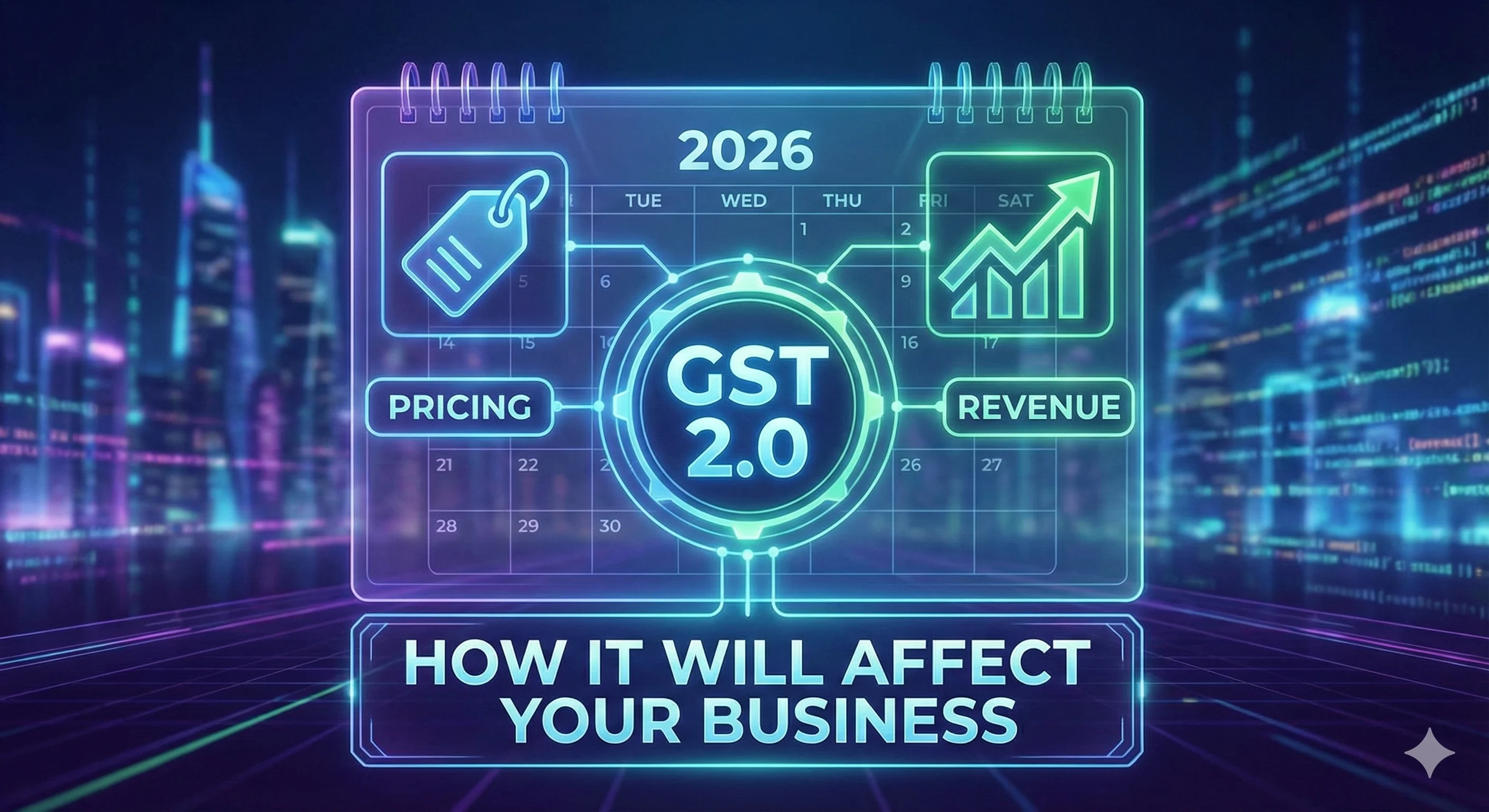
Impact of GST 2.0 on pricing and revenue
The business world is buzzing with anticipation about How GST 2.0 Will Affect Your Pricing and Revenue in 2026, and for good reason. This upgraded version of the Goods and Services Tax is expected to reshape how companies calculate prices, manage cash flow, and measure profitability. Whether you run a growing startup, a large enterprise, or a small shop, GST 2.0 will influence your bottom line in direct and indirect ways. Let’s break down what’s changing, why it matters, and how to prepare so you stay ahead of the competition.
Understanding What GST 2.0 Really Means for Businesses
GST 2.0 represents the most significant tax reform update since GST first launched. While GST was designed to simplify India’s indirect taxation, the new system takes this vision even further by improving transparency, reducing manual errors, and enabling faster processes.
Key Differences Between GST and GST 2.0
GST 2.0 introduces enhancements such as real-time tax credit validation, smarter return filing, reduced ambiguity in slab structures, and automatic invoice reconciliation. These changes aim to streamline compliance while leveling the playing field for all businesses.
Why the Government Introduced GST 2.0
The main goal is to eliminate loopholes, curb tax evasion, and simplify filing procedures. With digital adoption growing rapidly, the government now aims to make GST fully automated and more business-friendly.
The Core Features of GST 2.0 You Must Know
Automated E-Invoicing Enhancements
GST 2.0 strengthens e-invoicing by eliminating the need for manual data entry. Businesses will now enjoy real-time invoice uploads and faster validations, reducing reconciliation errors significantly.
Real-Time Input Tax Credit (ITC) Validation
Perhaps the biggest upgrade: ITC will now be approved instantly based on supplier compliance. This allows businesses to plan cash flow much more accurately.
Updated Tax Slabs and Rate Revisions
Slab updates may affect essential and luxury goods differently. You may need to rework pricing models based on adjusted GST percentages.
Simplified Return Filing: One Nation, One Return
Businesses will file just one monthly return instead of multiple forms. Less paperwork means more time to focus on growth.
How GST 2.0 Will Affect Your Pricing Strategy in 2026
GST 2.0 is expected to reshape pricing for nearly every industry. Understanding how to adjust your prices strategically will be essential for protecting your margins.
Impact of Revised Tax Slabs on Product Pricing
If certain items move into higher slabs, you may see an increase in cost prices. Transparent pricing becomes more important than ever.
Margins, Discounts, and Cost Structures Under GST 2.0
Your selling price, profit margins, and discounting model may require adjustment. Even a slight tax rate change can shift customer behavior.
Pricing Models: Cost-Plus vs. Market-Based Adjustments
GST 2.0 encourages businesses to shift from manual markup pricing to dynamic pricing informed by real-time tax data.
Revenue Implications: What Businesses Should Expect
Cash Flow Changes Due to Real-Time ITC
Instant ITC approval means improved liquidity and fewer blocked credits—a major advantage for SMEs prone to cash shortages.
Improved Compliance = Higher Net Revenue
With fewer penalties and late fees due to automation, businesses retain more revenue.
How GST 2.0 Impacts SMEs vs. Large Enterprises
SMEs benefit from simpler filing requirements, while large enterprises gain competitive advantages via faster reconciliation cycles.
Industry-Wise Impact of GST 2.0
Retail and E-commerce
Expect smoother invoice management, better analytics, and more accurate stock pricing.
Manufacturing Sector
Manufacturers will enjoy real-time tracking of raw materials, ITC, and production-related taxes.
Service Providers and Freelancers
Simplified compliance and reduced paperwork will ease operations significantly.
Preparing Your Business for GST 2.0
Updating Accounting Software and POS Systems
Integrate GST 2.0-ready systems to automate tax calculation and invoicing.
Training Finance and Billing Teams
Staff should know exactly how to work with new return formats and ITC rules.
Recalculating Budgets and Financial Projections
Revise all financial statements to align with updated tax liabilities.
GST 2.0 Compliance Checklist for 2026
- Maintain accurate digital invoices
- Perform monthly reconcilations
- Track supplier compliance for ITC
- Prepare for audits with proper documentation
Common Mistakes to Avoid When Adapting to GST 2.0
- Not updating your billing software
- Ignoring supplier compliance
- Miscalculating ITC claims
- Delaying return submissions
FAQs About How GST 2.0 Will Affect Your Pricing and Revenue in 2026
1. Will GST 2.0 increase my product prices?
It depends on slab adjustments. Some items may become cheaper, while others may get costlier.
2. How will real-time ITC help my business?
Faster credit approval improves cash flow and reduces working capital strain.
3. Will SMEs benefit from GST 2.0?
Yes, simplified returns and automation reduce workload and costs.
4. Should I change my pricing strategy in 2026?
Yes, reevaluate your pricing based on updated tax slabs and margin shifts.
5. Is e-invoicing mandatory for all businesses?
Thresholds may be revised, so check the latest government notifications.
6. Where can I read more about GST compliance?
A good resource is the official GST portal: https://www.gst.gov.in/
Conclusion
Understanding How GST 2.0 Will Affect Your Pricing and Revenue in 2026 is crucial for any forward-thinking business. By preparing early, updating your systems, and adjusting pricing strategies, you can turn these changes into competitive advantages. The businesses that adapt quickly will be the ones that thrive in the GST 2.0 era.
About the Author
Raj
GST expert and tax consultant helping Indian businesses navigate GST compliance.
Related Articles
GST Reforms 2025: India's New Simplified Tax Structure Explained
Complete guide to India's major GST reforms in 2025. Learn about the new two-tier rate structure, how 99% of items moved from 12% to 5%, and what this means for your business.
Understanding GST Basics: A Complete Guide for Indian Businesses
Learn everything about GST in India - from registration requirements to tax rates, filing returns, and compliance. Essential guide for business owners.
GST Rates and Classification Guide 2025: All You Need to Know
Complete breakdown of GST tax rates in India - 5%, 12%, 18%, and 28%. Learn which rate applies to your products and services with examples.
Need to Calculate GST?
Use our free online GST calculator for instant, accurate results
Try GST Calculator