Ultimate GST Compliance Checklist for FY 2025–26
Raj
13 December 2025
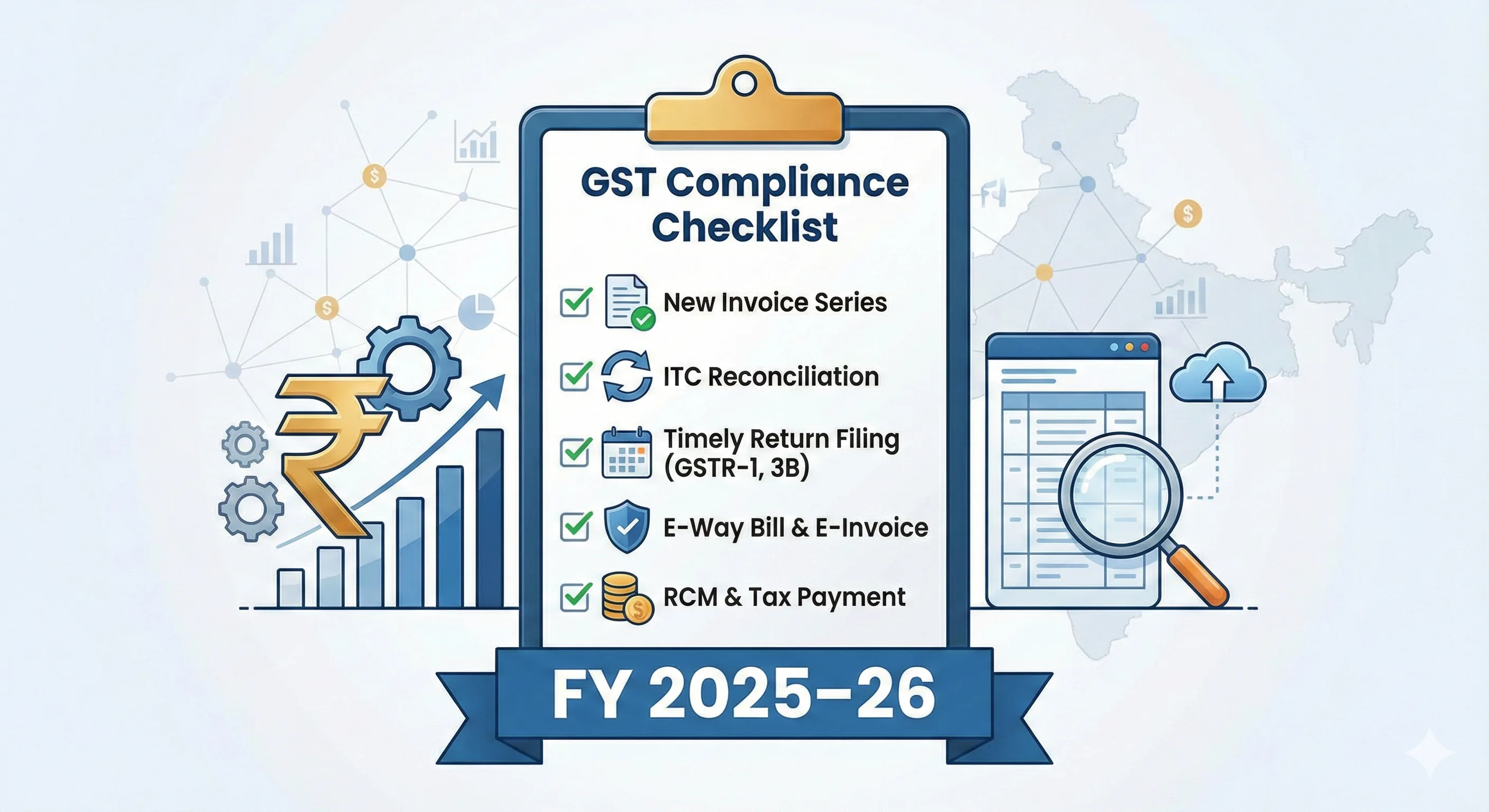
Complete GST compliance checklist for 2025-26
Following the GST Compliance Checklist for FY 2025–26 is essential for businesses that want to avoid penalties, maintain transparency, and stay on the right side of tax laws. With updated rules and enhanced reporting, FY 2025–26 demands disciplined compliance habits, timely filing, and accurate documentation.
Understanding GST Compliance Requirements for FY 2025–26
GST continues to evolve in India, and each financial year introduces new norms to streamline the taxation process. For FY 2025–26, businesses must pay attention to key updates, filing procedures, and audit requirements. Complying with GST norms fosters trust, improves financial accuracy, and protects businesses from legal consequences.
Key Changes Introduced for FY 2025–26
This year emphasizes digitization and error-free filing. Updates include:
- Stricter invoice-matching rules
- Increased scrutiny of Input Tax Credit (ITC) claims
- Expanded e-invoicing requirements
- Enhanced validation for GSTR-1 and GSTR-3B alignment
Who Must Follow the GST Compliance Checklist?
Whether you’re a startup, MSME, freelancer, or e-commerce seller, GST compliance applies to you if your business crosses the prescribed turnover threshold or engages in inter-state supply.
Step-by-Step GST Compliance Checklist for FY 2025–26
Below is the complete checklist to ensure your business stays 100% compliant.
Verify GST Registration Details
Start by ensuring your GST registration details—such as legal name, address, phone number, and business vertical—are accurate. Incorrect details may lead to notices or return rejections.
Maintain Accurate Books of Accounts
Well-maintained records are the backbone of GST compliance. Keep updated logs for:
- Sales and purchase invoices
- Inventory records
- Input and output tax
- Credit notes and debit notes
Reconcile GSTR-1, GSTR-2B & GSTR-3B
Monthly reconciliation prevents mismatches that could affect your ITC. Reconcile sales, purchase data, and tax liability regularly.
Ensure Timely Filing of GST Returns
Depending on your turnover, file returns monthly or quarterly. Delays can lead to interest and hefty penalties.
Comply with E-Invoicing Requirements
E-invoicing is mandatory for businesses above a certain turnover threshold. Ensure your software generates IRN and QR codes properly.
Update HSN Codes and Tax Rates
Incorrect classification can lead to penalties and denial of ITC. Ensure you use the correct HSN codes for all products and services.
Advance GST Compliance Measures for FY 2025–26
Conduct Internal GST Audits
Internal audits help identify errors before they escalate. Check invoice details, ITC eligibility, and tax payments.
Automate GST Filing Using Software
Automation significantly reduces human error. Popular GST software tools offer invoice generation, reconciliation, and automated tax calculations.
Stay Updated with GST Notifications
Subscribe to government portals and reliable tax sites to stay informed about new updates. External Reference: https://www.gst.gov.in
Common GST Mistakes and How to Avoid Them
- Claiming ineligible ITC
- Missing invoice details
- Filing incorrect GSTR-3B
- Ignoring reconciliation
- Using outdated tax rates
Avoid these mistakes by reviewing data monthly and adopting digital tools.
GST Compliance Checklist for Small Businesses
Small businesses often struggle with documentation and timely returns. A simplified checklist includes:
- Maintaining digital invoices
- Filing GSTR-1/3B on time
- Using free government accounting tools
- Keeping vendor records updated
GST Penalties for Non-Compliance in FY 2025–26
Penalties may include:
- Late fee of ₹50/day for delayed returns
- Interest on unpaid tax
- Blocking of ITC
- Legal notices for significant discrepancies
FAQs on GST Compliance Checklist for FY 2025–26
1. What is the GST Compliance Checklist for FY 2025–26?
It’s a step-by-step guide to help businesses meet all GST requirements, from filing returns to accurate reporting.
2. Who needs to follow this checklist?
Any GST-registered business, including MSMEs, startups, and service providers.
3. What happens if I file GSTR-3B late?
You’ll incur late fees and interest on outstanding tax.
4. Is e-invoicing mandatory in FY 2025–26?
Yes, for businesses crossing the specified turnover threshold.
5. How do I avoid ITC mismatches?
By regularly reconciling GSTR-2B with purchase invoices.
6. Can small businesses automate GST filings?
Absolutely—many tools simplify compliance and reduce error risks.
Conclusion
The GST Compliance Checklist for FY 2025–26 empowers businesses to stay compliant, avoid penalties, and operate transparently. With proper planning, routine reconciliation, and timely filing, GST compliance becomes smoother and more efficient.
About the Author
Raj
GST expert and tax consultant helping Indian businesses navigate GST compliance.
Related Articles
GST Reforms 2025: India's New Simplified Tax Structure Explained
Complete guide to India's major GST reforms in 2025. Learn about the new two-tier rate structure, how 99% of items moved from 12% to 5%, and what this means for your business.
Understanding GST Basics: A Complete Guide for Indian Businesses
Learn everything about GST in India - from registration requirements to tax rates, filing returns, and compliance. Essential guide for business owners.
GST Rates and Classification Guide 2025: All You Need to Know
Complete breakdown of GST tax rates in India - 5%, 12%, 18%, and 28%. Learn which rate applies to your products and services with examples.
Need to Calculate GST?
Use our free online GST calculator for instant, accurate results
Try GST Calculator